Category

narrative strategy and diplomacy

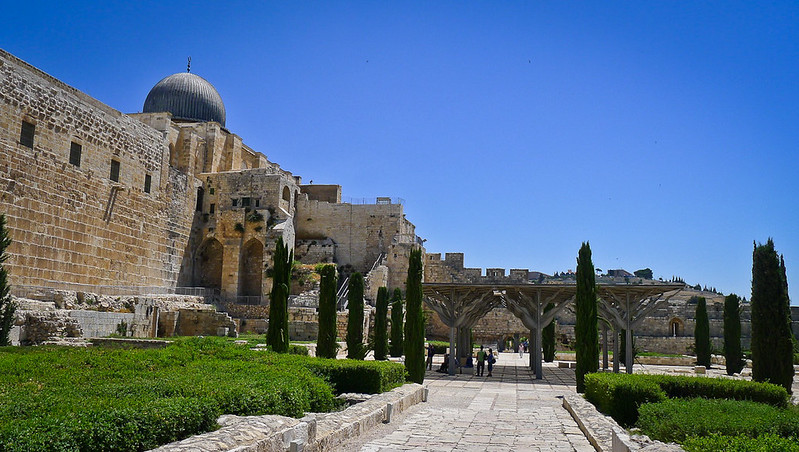
The southern wall of the Temple Mount in Jerusalem beneath a clear blue sky, illustrating the historical and political setting of the Israel–Palestine conflict.

China after 7 October: Language, History, and the Politics of Neutrality

By China, intercultural communication, narrative strategy and diplomacy

Understanding geopolitical risk requires more than following official positions. It also requires paying close attention to the language governments use, the historical narratives they draw upon, and the assumptions that shape how international events are interpreted.

My latest essay for the Telos-Paul Piccone Institute explores China’s response to the Hamas attacks of 7 October 2023 through this lens. Beijing presented itself as an impartial advocate of peace, calling for restraint, the protection of civilians, and a two-state solution. Yet a closer reading of its official statements, legal interventions, and diplomatic initiatives suggests that its claim to neutrality was more selective than it first appeared.

Rather than judging China’s position solely by its formal diplomatic relations, I examine how official discourse distributed agency, victimhood, legitimacy, and responsibility. The article argues that Palestinian suffering was consistently situated within a detailed historical narrative of occupation, dispossession, and national liberation, while Israeli suffering following 7 October was more often absorbed into general language about civilian harm, escalation, and instability. In this sense, historical context did not simply explain the conflict; it shaped the moral framework through which it was understood.

Drawing on Chinese-language government statements, diplomatic documents, and legal submissions, the essay also considers how apparently technical choices of wording carry significant political consequences. Whether describing terrorism, hostages, civilian casualties, or the causes of conflict, language is never entirely neutral. It frames political reality, allocates legitimacy, and signals priorities.

For organisations working internationally, these questions extend well beyond academic debate. Governments communicate strategically, and understanding not only what is said, but how it is said—and what is left unsaid—is often essential for interpreting policy, anticipating diplomatic behaviour, and assessing political risk.

The essay forms part of the Telos-Paul Piccone Institute’s Israel Initiative, which examines the Israel–Palestine conflict through the lens of critical theory.

You can read the full article here:
https://insights.telosinstitute.net/p/china-after-october-7-selective-neutrality


Main image:Israel‘ by Eugene Kaspersky, licensed under Creative Commons Attribution–NonCommercial–ShareAlike 2.0 Generic (CC BY-NC-SA 2.0), via Flickr.
China’s Peacekeepers in South Sudan: Diplomacy, Narrative and the Language of Credibility | InOtherWords

By Africa, China, intercultural communication, narrative strategy and diplomacy, perspectives from the field

China’s Peacekeepers and the Diplomacy of Recognition

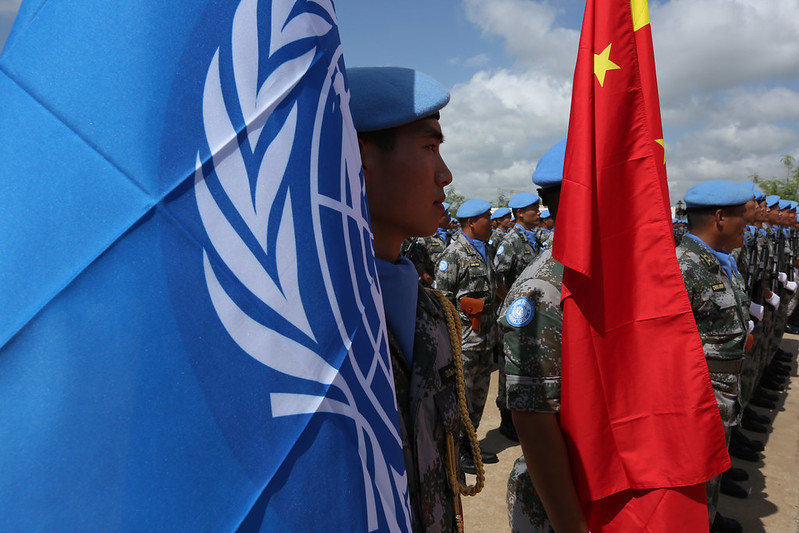
My latest piece for The China Global South Project examines how China’s contributions to UN peacekeeping are presented — not only in what peacekeepers do, but in how their work is described and celebrated. I take the recent medal ceremony for China’s 11th Peacekeeping Infantry Battalion in South Sudan as a case study in the language of diplomacy. It is a story less about peace achieved, and more about how recognition itself becomes part of China’s global self-presentation.

This tension between what is and what is being communicated in contexts of peace and conflict runs through much of my work. Over the past few years, I’ve explored how policy, perception, and narrative intersect in China’s engagement with the Global South. Through regular contributions to The China Global South Project, I’ve written about China’s presence across East Africa and the Middle East.

This new piece connects that ongoing inquiry with my academic roots — and with the fieldwork at the heart of my PhD. During that research, I spent extended periods among the Chinese community in Juba, studying how peace and security were lived, discussed, and understood from within. These experiences continue to shape how I approach questions of language, diplomacy, and credibility in international settings.

The article appears against a shifting backdrop. South Sudan once again faces rising insecurity, with conflict spreading in the north and political struggles testing a fragile peace. Juba today feels markedly less stable than it once did. It’s a reminder to ask what “peacekeeping” really means — and whose narratives define it.

Read the full article on The China Global South Project

Photo: Members of China’s peacekeeping battalion receiving UN medals for service in Juba, South Sudan (2017). Via Flickr, by Eric Kanalstein / UNMISS — used under a Creative Commons CC BY-NC-ND 2.0 license.